——2026-10-23
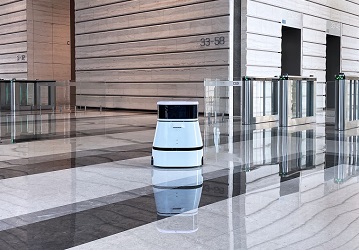
One robot, six zones, two quiet windows — and a cleaning team that got its nights back.
A large hospital with a ground-floor public area of roughly 9,600 sqm — lobbies, corridors, waiting areas, and connecting walkways. High foot traffic during the day, and a hygiene standard that doesn't allow for "good enough."
Deep-cleaning that area every week meant pulling staff from other duties, paying overtime, and accepting a quality level that depended on how tired the night team was.
The facility wanted three things: a consistent clean, no disruption to patients, and no additional headcount.
The facility divided the 9,600 sqm area into six zones and deployed a single C2 cleaning robot.
Using the Allybot app, the team scheduled a weekly deep-scrub task across two low-traffic windows:
5:30–8:00 AM
12:00–3:00 AM
The C2 handles the route autonomously, using a multi-sensor stack (LiDAR, IMU, ultrasonic, and structured-light cameras) to avoid people and obstacles. When the battery runs low, it returns to its dock and recharges without operator involvement.
Setup followed four steps: activate the unit and connect it to the Allybot app, record and save a map of the floor, mark no-go and passable zones, then configure the cleaning task and schedule.
No floor markers, no ceiling modifications, no building work.
The C2 combines scrubbing, dust-mopping, and vacuuming in a single pass. Instead of maintaining three machines and three schedules, the facility maintains one — which is also how a single unit covers the full area within two quiet windows.
One robot covers the full 9,600 sqm area
Deep cleaning happens in off-hours windows, with no disruption to patients or staff
Staff involvement is limited to two actions: filling the clean-water tank and emptying the wastewater tank
Cleaning efficiency of 300–800 sqm per hour, with 5–12 hours of runtime per charge
No new night shift. No standing overtime line. A floor that is consistently clean before the first patient arrives.
The lesson isn't "buy a robot." It's that large, repetitive, after-hours floor care is one of the clearest places to start — measurable area, predictable schedule, and a task that doesn't require a person to make judgment calls.
If your facility has a similar footprint, we'd be glad to map it with you. Visit wdcrobot.com or get in touch.

A robot manufacturing brand invested by the Chinese Academy of Sciences. Our own factory supports your customized needs and our vision is to build the most efficient robotics ecosystem in the world.
Terms & ConditionsPrivacy PolicyCopyright © 2024 Jegtheme. All rights reserved.